
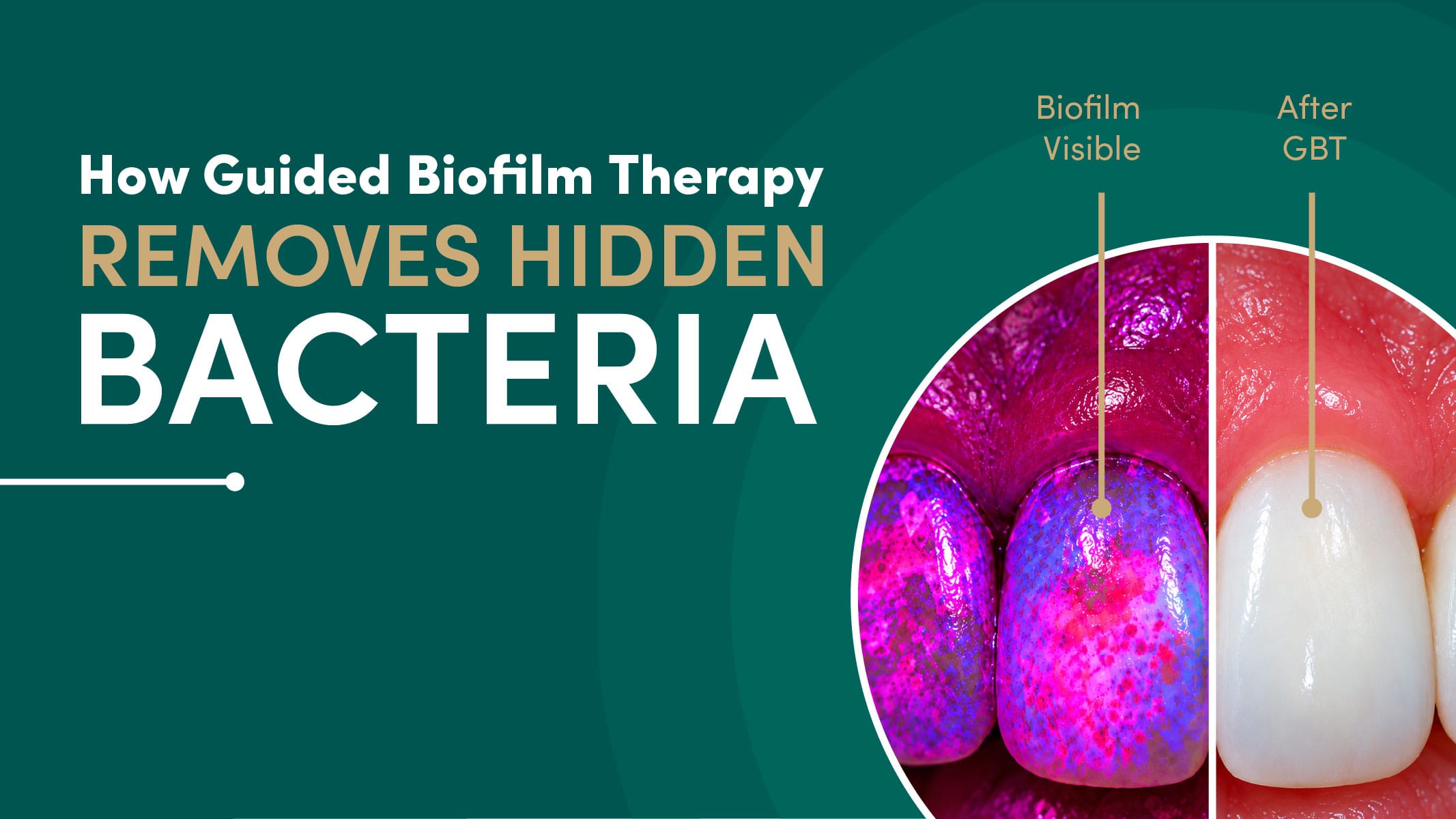

Most people think of a dental cleaning as the removal of tartar, but advances in dental technology have made it possible for it to be a catalyst for overall health. Guided Biofilm Therapy, or GBT, is a pain-free dental cleaning technique that significantly reduces oral biofilm, a layer of bacteria, and other oral pathogens that can hide along the gumline, between teeth, around restorations, and in other hard-to-reach areas that traditional cleanings simply can’t reach.
Key Takeaways
- Guided Biofilm Therapy (GBT) uses a colored disclosing gel to reveal hard-to-see bacterial biofilm, helping your dental team target areas that need attention.
- GBT combines air polishing with targeted instrumentation to remove oral bacterial biofilm, surface stains, and hardened tartar throughout the mouth.
- Treatment can help clean difficult-to-reach areas, including around the gumline, between teeth, and around braces, implants, and restorations.
- Many patients find GBT incredibly comfortable.
- Seeing where biofilm collects helps patients identify missed spots and improve their daily brushing and flossing.
- GBT supports preventive care and periodontal maintenance but does not replace daily brushing and flossing, regular dental exams, or other necessary treatment.
Table of Contents
- GBT: More Than Plaque Removal
- What is Biofilm?
- What is Guided Biofilm Therapy?
- How GBT Differs From a Traditional Dental Cleaning
- Benefits of Guided Biofilm Therapy
- GBT and Systemic Overall Health
- What Does GBT Feel Like?
- FAQs
GBT: More Than Plaque Removal
Guided Biofilm Therapy uses specialized disclosing gel to make biofilm visible. This technology helps dentists target problem areas to provide effective cleanings and more personalized care.
Guided Biofilm Therapy (GBT) is an innovative hygiene approach that helps your dental team:
- Identify oral biofilm more clearly
- Focus treatment where it is most needed
- Remove deposits from difficult-to-reach areas
- Improve patient education and home-care habits
- Increase comfort of professional hygiene treatment
Schedule your GBT visit today
What is Biofilm?
Biofilm is a sticky community of microorganisms that adheres to teeth and oral tissues. It is commonly referred to as plaque, although the term biofilm emphasizes that it is a living, organized layer of bacteria, yeast and viruses rather than simply food debris. Biofilm includes bacterial plaque and these other oral pathogens.
Harmful oral biofilm can collect in areas that are difficult to see and reach even for those who are diligent with their daily brushing and flossing routine.
What is Guided Biofilm Therapy?
GBT is a professional oral-hygiene protocol that uses a disclosing gel and specialized instruments to identify and remove oral biofilm. GBT is the culmination of more than 40 years of research and development in search of an effective, pain-free alternative to traditional dental cleanings.
GBT involves an 8-step protocol for cleaning biofilm from hard to reach places. Here’s what happens during a routine appointment:
- Clinical examination
- Oral biofilm disclosing
- Air flowing with a fine powder
- Ultrasonic instrumentation when/where needed
- Targeted removal of calculus
- Evaluation of gum health
- Personalized home-care recommendations
- Follow-up and hygiene maintenance where appropriate
GBT improves management of oral biofilm, but it doesn’t mean you can cut back on regular dental visits. GBT should be applied in conjunction with daily brushing and flossing, comprehensive dental examinations, periodontal diagnosis, restorative treatment when necessary, and professional treatment for advanced periodontal disease.
How GBT Differs From a Traditional Dental Cleaning
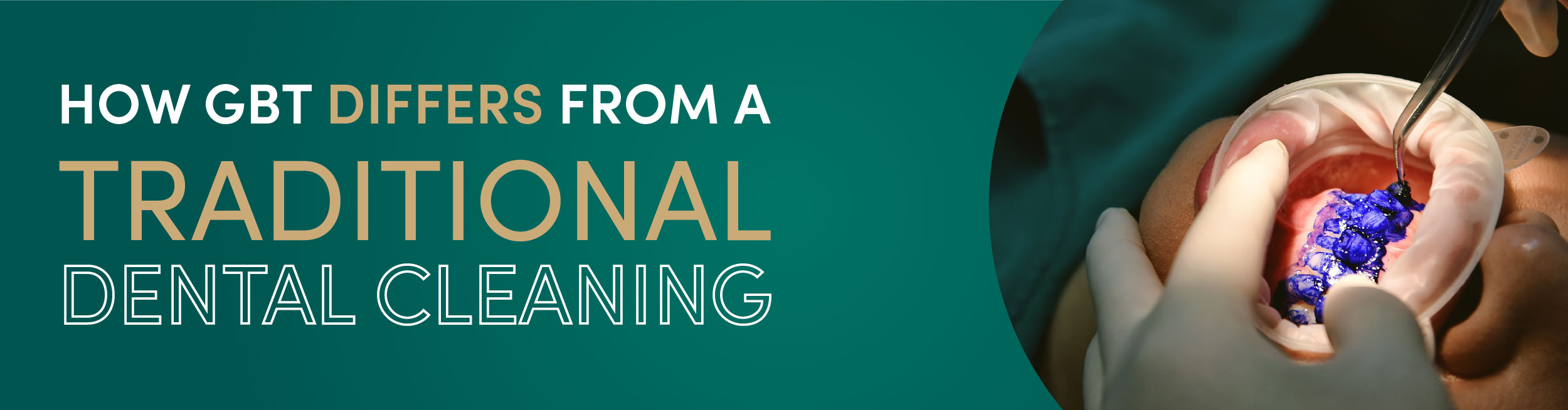
What can you expect at a Guided Biofilm Therapy appointment? Here is a guide to how your GBT appointment may be different from your last dental cleaning.
| Traditional cleaning | Guided Biofilm Therapy cleaning |
| Usually relies primarily on visual inspection | Uses a disclosing gel to make biofilm visible |
| Treatment follows a standardized sequence | Treatment is adjusted according to the patient’s individual findings |
| Brushing and flossing challenges are discussed generally | Specific missed areas are shown to the patient with instructions and tips to help address the challenges specifically |
| Scaling and polishing may be central components | Biofilm disclosing, air flowing, and targeted instrumentation are combined with no polishing that scratches your teeth or restorations |
| Comfort can vary depending on the patient and deposits present | Uses minimally-invasive techniques to focus treatment and improve comfort |
| Patient receives limited visual feedback | Provides a visual explanation of where biofilm remains |
Benefits of Guided Biofilm Therapy
Guided Biofilm Therapy boasts many benefits for both patients and dentists. For patients, GBT offers a gentler cleaning experience and access to more information to help them plan their at-home hygiene.
More precise biofilm removal
Because the disclosing gel reveals hard-to-see biofilm, the dental team can focus on areas that need the most attention instead of only visible tartar and plaque.
Improved patient education
With GBT’s purple disclosing agent, patients can also see their own biofilm, helping them understand which spots they miss when brushing and flossing and supporting better dental hygiene. GBT also helps dentists identify which bacteria are present, helping them create more effective prevention plans.
A more comfortable experience
GBT can be an appealing option for patients who experience sensitivity, anxiety, or discomfort during traditional hygiene treatment. Though every patient’s experience is unique, most report feeling light sprays of water and mild pressure or vibration during their GBT appointment.
Helpful for hard-to-reach areas
One of the main benefits of GBT is that it allows dentists to clean hard-to-reach areas, such as gumlines, tight spaces between teeth, orthodontic brackets and wires, implants, crowns, bridges, veneers, and irregular tooth surfaces.
Support for periodontal maintenance
Biofilm management is an important component of ongoing care for patients with gingivitis or a history of periodontal disease. Your dentist can determine if GBT can be used as part of a broader periodontal-maintenance plan.
GBT and Systemic Overall Health
Oral health is connected to systemic health through shared inflammation, immune responses, behaviors, and risk factors. Research has found associations between oral pathogens and several health conditions, including type 2 diabetes, cardiovascular disease, cancers, and brain conditions, including dementia and Alzheimer’s. Regular preventive dental visits, including procedures like GBT, can support overall health.
What Does GBT Feel Like
Many patients find air flowing comfortable, but every mouth is different. Sensitivity can occur if tissues are unhealthy or root surfaces are exposed, depending on the severity.
Depending on the equipment and area being treated, patients may experience:
- A light spray of warm water
- Mild pressure or vibration
- A slightly sweet taste
The team at Montrose Dental Wellness is extensively trained to help make your visit as comfortable as possible.
Schedule your GBT appointment today
FAQs
Is Guided Biofilm Therapy the same as a regular dental cleaning?
No. GBT is a structured biofilm-management protocol that uses oral biofilm and plaque disclosure gels with specialized equipment to guide treatment. It may include some of the same elements as a conventional professional hygiene cleaning, such as ultrasonic instrumentation or polishing, depending on the patient’s needs.
Is GBT painful?
Over 95% of patients find GBT to be painless. Some individuals may experience sensitivity, which can vary depending on gum inflammation, exposed roots, tartar buildup, and individual tolerance. At Montrose Dental Wellness, our team is trained to identify potential sensitivity risks and offer a range of solutions for our patients.
Does GBT remove tartar?
GBT can help remove soft biofilm and surface stains. Hardened tartar generally requires ultrasonic or hand instrumentation.
How long does a GBT appointment take?
Appointments in our office for Hygiene Therapy and Periodontal Maintenance therapy are 1 hour each. Individuals who need additional time or treatment are scheduled for additional appointments to meet their needs. Additional services are offered to patients who may benefit from treatments to help lower their calculus or tartar amounts. The length of the appointment depends on the patient’s oral-health condition, the amount of biofilm and calculus present, and whether additional periodontal treatment is required.
Can children receive GBT?
Yes! Depending on the patient’s age, our office may adjust the appointment slightly, but most children over the age of five are well suited. For patients under five, we use a slightly modified approach.
Is GBT safe with implants, crowns, or braces?
Yes. GBT is completely safe for use with implants, crowns and braces. We have additional instruments that support GBT around implants.
How often should I have GBT?
Frequency depends on gum health, cavity risk, periodontal history, home care, restorations, and other clinical factors. Most patients receive hygiene and GBT care every 3-6 months, while others may need to increase frequency to every other month temporarily in specific situations. Our hygiene team will help determine the right frequency for your individual needs.
Can GBT treat gum disease?
Yes. GBT is used as part of professional biofilm management to treat gum disease and support periodontal maintenance.
More questions? Ready to schedule your appointment? Call us to find out if GBT is right for you (970) 497-4009